

Lessons from Japan, Mexico and the United States
Long-period ground motion is often discussed in Japan because the country has extensive experience with large earthquakes, high-rise buildings, and detailed seismic monitoring.
However, the phenomenon is not unique to Japan. Large earthquakes around the world can generate long-period ground motion, and local geological conditions and building characteristics can determine how strongly that motion is experienced. Examples from Mexico, Japan, and the United States illustrate an important principle: earthquake risk depends on the interaction between the earthquake, the ground, the building, and the contents of the building.
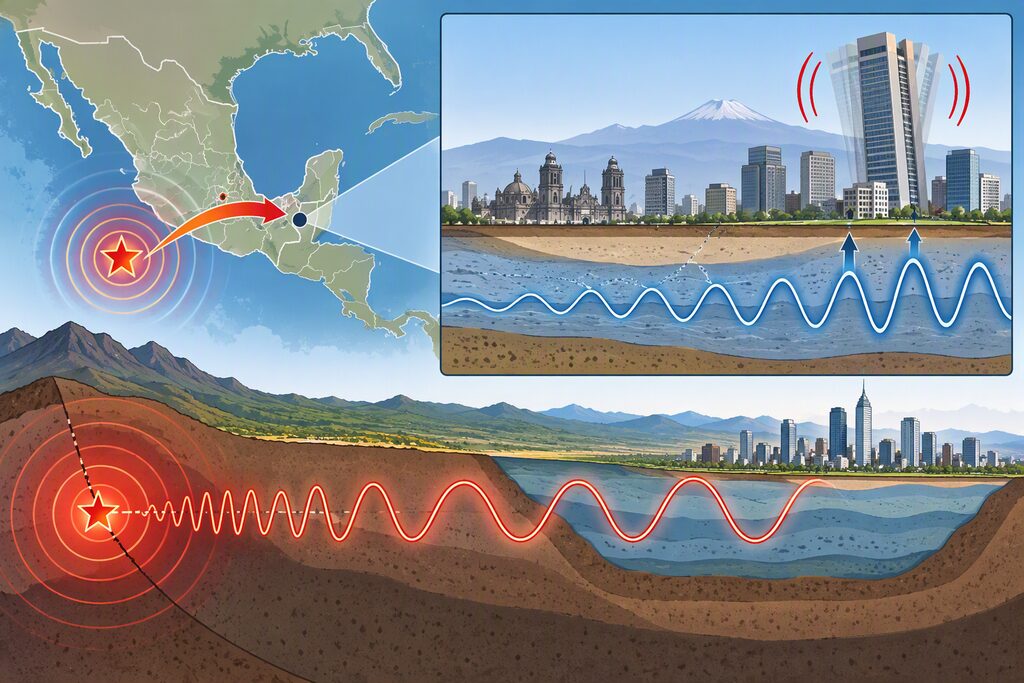
As discussed in our earlier article, the clearest illustration of this principle is Mexico City, where the 1985 Michoacan earthquake — roughly 400 kilometers away — caused devastating damage because the city’s ancient lakebed sediments amplified long-period motion that happened to match many buildings’ natural periods. This section looks at additional cases, closer to home for many readers, that reinforce the same lesson from different angles.
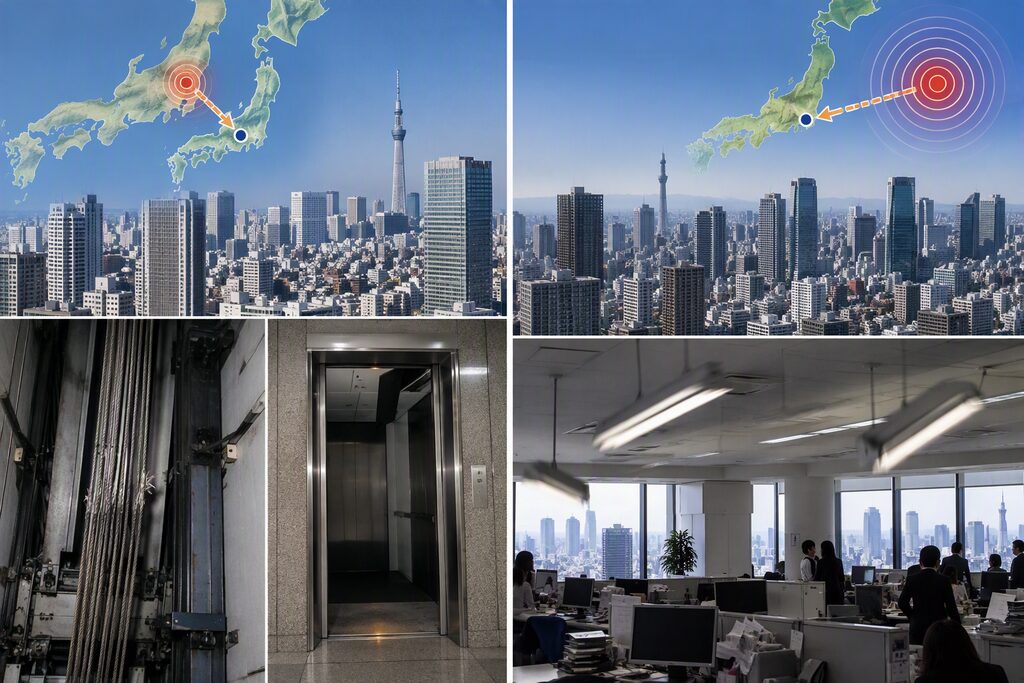
Japan provides several examples of long-period ground motion affecting areas far from an earthquake source. During the 2004 Niigata-ken Chuetsu Earthquake, long-period effects were observed in Tokyo — roughly 200 kilometers away — including damage to elevator systems in a high-rise building. It was an early demonstration that a distant earthquake’s magnitude and epicentral distance alone cannot predict how a city’s high-rise infrastructure will respond.
The 2011 Great East Japan Earthquake, discussed in more detail in our first article, provided an even larger example: high-rise buildings in the Tokyo metropolitan area experienced long-duration movement despite being far from the earthquake’s source.
When Ground-Level Intensity Doesn’t Match What Happens Upstairs
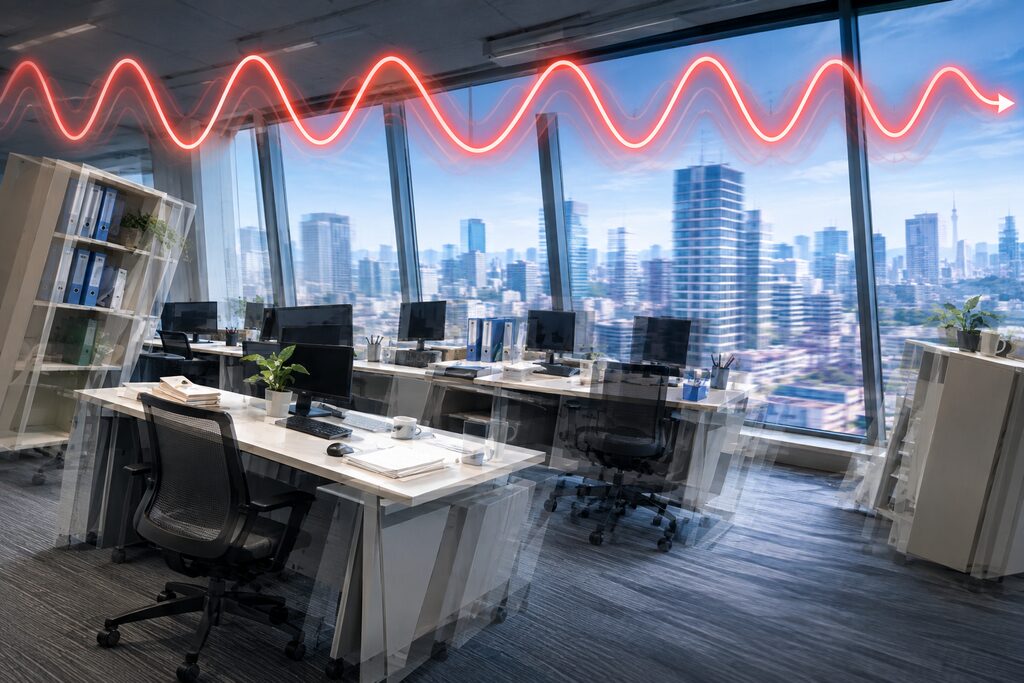
The 2011 earthquake also demonstrated why conventional seismic intensity does not always tell the complete story for high-rise buildings. The Japan Meteorological Agency reports that high-rise buildings in Osaka experienced substantial shaking and interior damage even though the ground-level seismic intensity there was only 3.
This is one of the reasons Japan introduced Long-Period Ground Motion Intensity. The four-level scale is designed to indicate the degree of movement and potential damage experienced in high-rise buildings, including furniture and fixture movement and the difficulty people may have moving. This approach recognizes that the experience inside a high-rise building can differ substantially from the shaking measured at ground level.
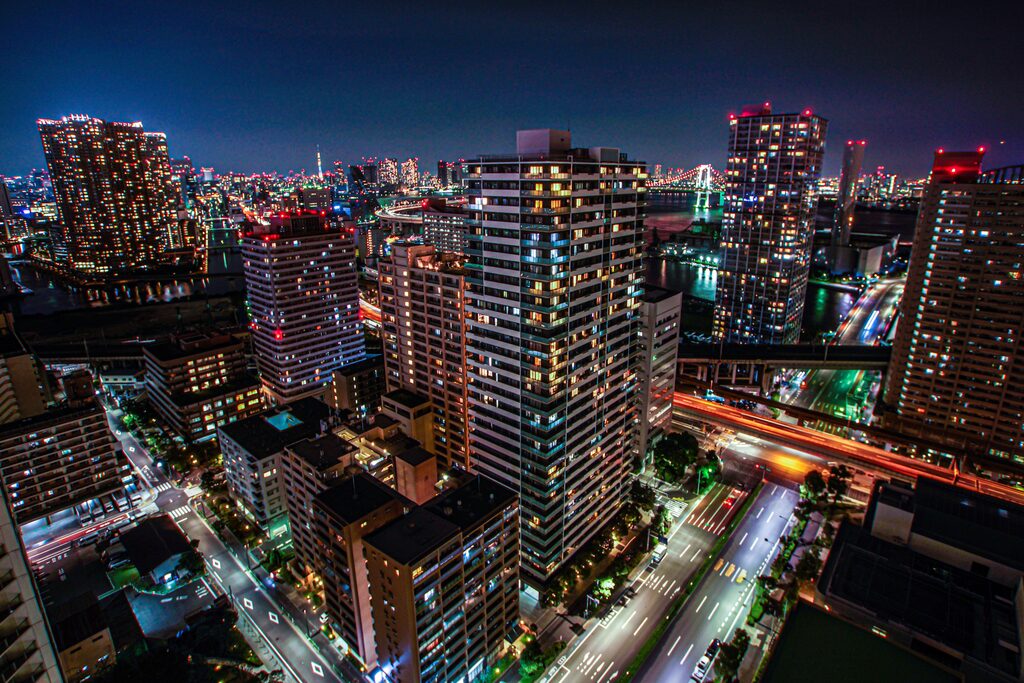
Large Japanese metropolitan areas such as Tokyo, Nagoya, and Osaka are located on broad plains and contain many high-rise buildings. The Japan Meteorological Agency identifies these urban environments as areas where long-period ground motion is an important concern. The combination of large urban populations, high-rise construction, and sedimentary ground conditions creates a situation in which long-period effects deserve specific attention — not because high-rise buildings are inherently unsafe, but because their longer natural periods mean they can respond differently from low-rise buildings.
References:Performance of High-rise Buildings during the 2011 Great East Japan Earthquake
Long-period ground motion is also relevant to earthquake preparedness in the United States. The Cascadia Subduction Zone is one example: a future great earthquake in the region could generate long-period ground motion that affects large urban areas, including Seattle. Researchers have examined how local basin structures and the characteristics of tall buildings may influence the response to long-period seismic waves.

The specific earthquake scenario differs from Japan and Mexico, but the underlying physical principle is similar — a sedimentary basin can amplify or prolong certain components of seismic motion, and this is particularly relevant to tall buildings because their natural periods can overlap with longer-period seismic motion. The result is a complex interaction involving three components: Earthquake → Ground → Building. The earthquake determines the characteristics of the incoming waves, the ground modifies those waves, and the building responds according to its own dynamic characteristics.
Mexico City demonstrated the importance of soft sediments and building periods. Japan demonstrated the effects of long-distance shaking on high-rise buildings, in two separate earthquakes twenty years apart. Research in the United States highlights the importance of long-period motion and geological basin effects in regions exposed to large earthquakes. Together, these cases show that long-period ground motion is a global issue, not a Japan-specific one.
Companies operating in earthquake-prone areas should consider whether long-period ground motion could affect their facilities. This is particularly relevant for high-rise offices, hospitals, laboratories, hotels, commercial buildings, research facilities, industrial sites, warehouses, and buildings containing critical equipment.
As we discussed in our previous article, the consequences are not limited to structural damage — furniture can shift, storage cabinets can overturn, and elevators can become unavailable, delaying the recovery of normal operations even when the main structure remains usable.
We cover a practical, step-by-step approach to reducing these risks in our business continuity article, including physical measures such as Pro7’s gel-based seismic adhesive pads, which are designed for furniture and equipment where drilling is undesirable.

The biggest lesson from international experience is that earthquake risk is not defined by the epicenter alone. Mexico City showed that a distant earthquake can produce severe effects when geological amplification and building response interact. Japan demonstrated that long-period motion can affect high-rise buildings hundreds of kilometers from a major earthquake, in more than one event decades apart. Research in the United States shows that long-period effects are also relevant to future earthquake planning in major urban regions.

Earthquake preparedness should consider how the earthquake, the ground, the building, and the contents of the building interact.
For companies, this broader perspective can reveal risks that might otherwise be overlooked. The next step is practical: identifying what businesses can do before an earthquake to reduce the impact on people, equipment, and operations.