
Earthquake preparedness is often discussed in terms of whether a building can withstand an earthquake. That is an essential question, but it is not the only one businesses need to consider. For companies, the more practical question may be:
What happens inside the building while and after the earthquake?
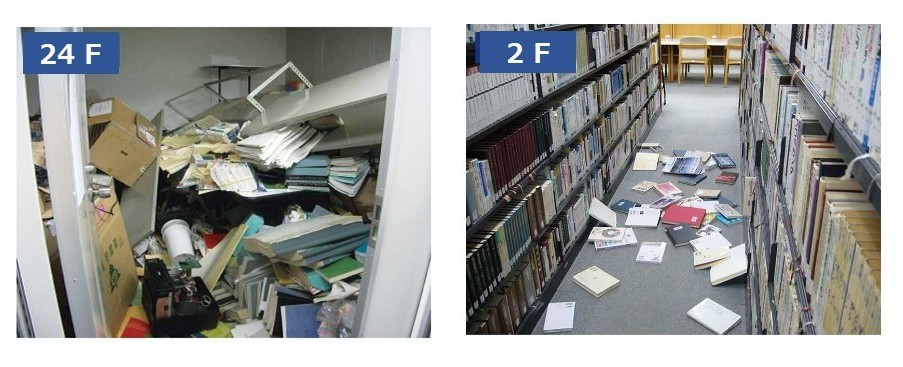
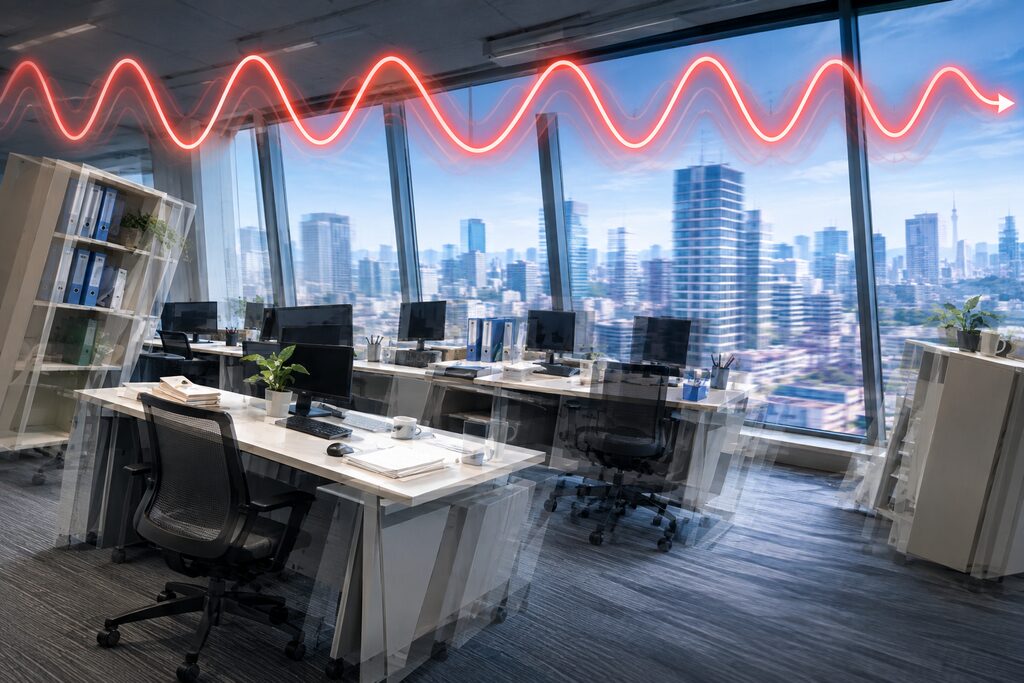
This question becomes particularly important when considering long-period ground motion. High-rise buildings can experience prolonged movement, and furniture, equipment, storage systems, elevators, and other interior elements may be affected. Even if the main structure remains usable, damage or movement inside the facility can create safety problems and interrupt business operations.
Business continuity planning often focuses on systems, employees, suppliers, data, and communication.
Physical assets also deserve attention. A business cannot easily continue operating if essential equipment is damaged, access routes are blocked, or employees cannot safely reach critical areas.
The Japan Meteorological Agency notes that strong long-period ground motion can cause furniture and fixtures in high-rise buildings to move or overturn and can affect elevator operation. These effects can create both safety and operational problems.
For example, an overturned cabinet may injure an employee and block a corridor.
A moved piece of equipment may be damaged and also prevent access to another device.
An elevator shutdown may make upper-floor equipment difficult to inspect or operate. These are business continuity issues as well as earthquake safety issues.
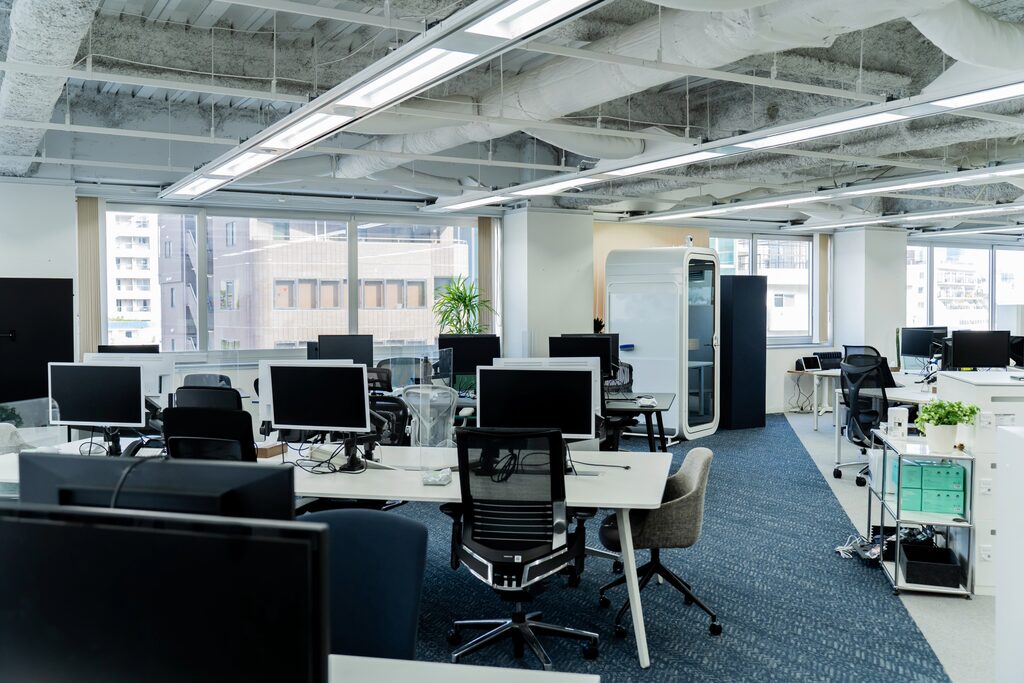
A practical first step is a physical inspection of the workplace. Walk through each area and ask: “If this floor moved repeatedly for several minutes, what could move, fall, overturn, or become inaccessible?”
This question is useful because long-period ground motion is not simply a single sudden impact. Prolonged movement can cause repeated displacement.
The inspection should cover:
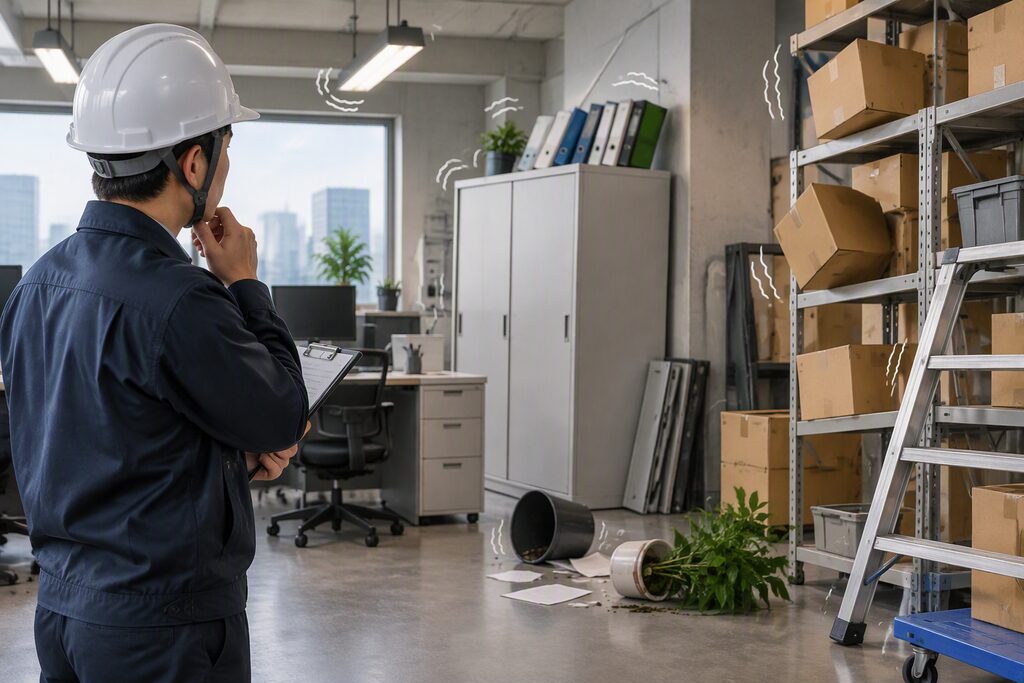
Not every item in a facility has the same level of importance. A company should identify equipment whose failure would have a significant effect on safety or operations.
Examples may include:
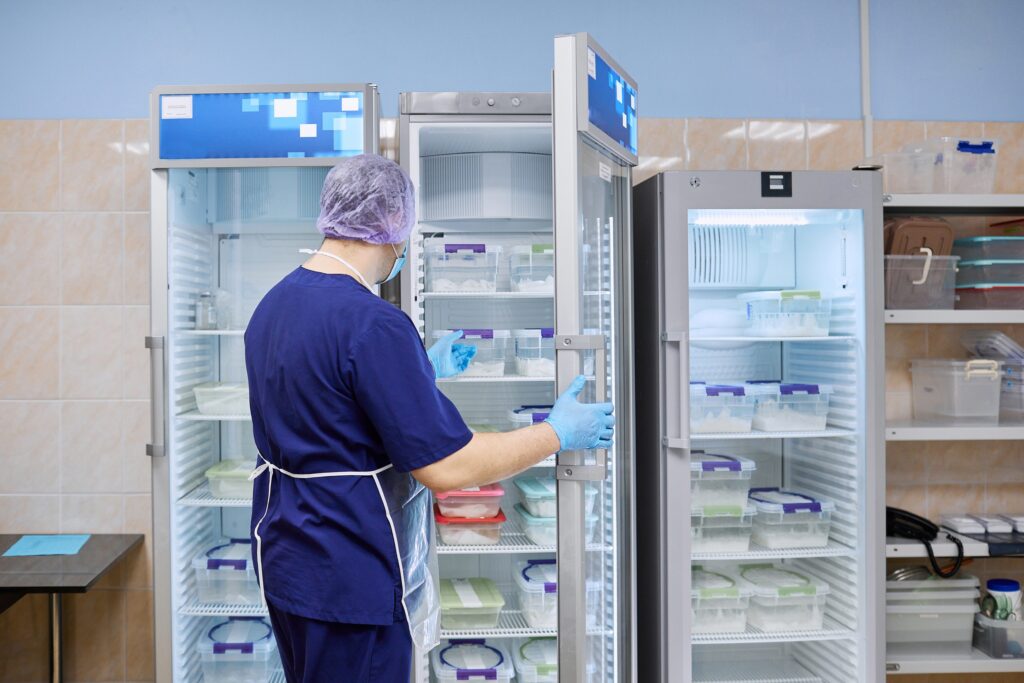
Consider what would happen if each item moved or became unavailable.
These questions help determine priorities.
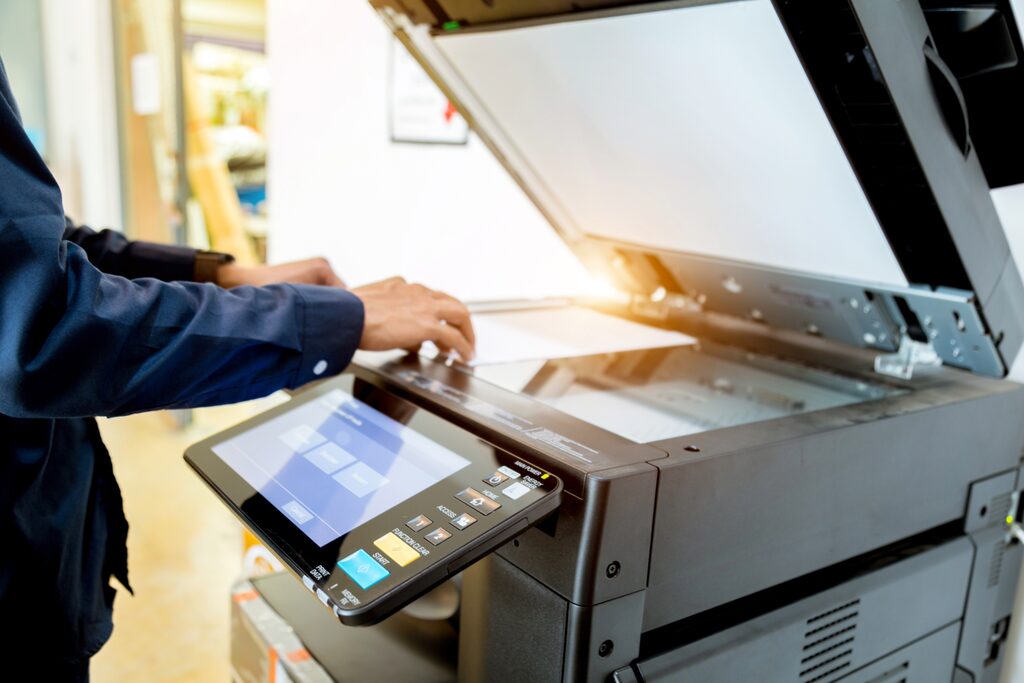
Critical equipment is not the only concern. Ordinary furniture can also become a significant hazard.
Tall cabinets and shelving may overturn.
Storage units may move.
Office equipment may slide. Objects stored at height may fall.
The Japan Meteorological Agency includes furniture and fixtures among the effects considered when evaluating long-period ground motion in high-rise buildings. Businesses should therefore include furniture in their earthquake risk assessments.
Particular attention should be paid to furniture located:
Evacuation routes are especially important.
A piece of furniture that moves several centimeters may seem insignificant under normal circumstances. During an emergency, however, even partial obstruction can make movement more difficult.
OSHA identifies furnishings and inadequately secured stored materials as workplace earthquake hazards and recommends hazard identification, planning, and mitigation.
Companies should therefore inspect:
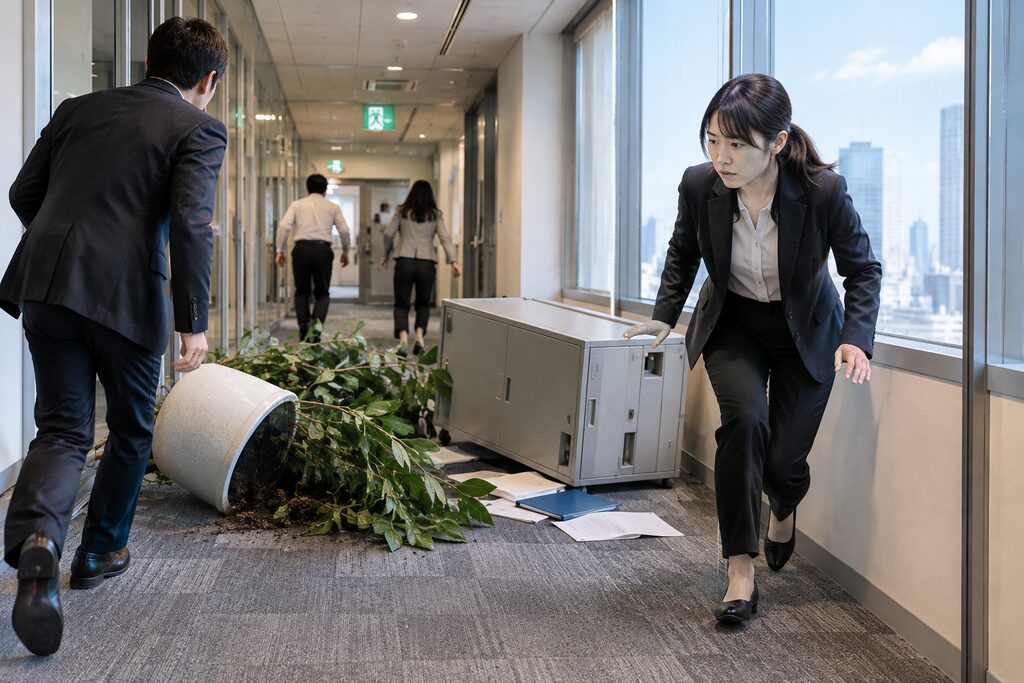
Storage arrangements should also be reviewed. Heavy items should not be placed where their movement could create an immediate hazard to people.
In a high-rise building, earthquake movement may differ significantly between floors.
The Japan Meteorological Agency explains that higher floors generally experience greater shaking during long-period ground motion. For businesses occupying upper floors, this means that earthquake preparedness should not be based only on what happens at ground level.
Upper-floor offices may contain expensive computers, laboratory equipment, medical devices, storage systems, and other assets. These items should be assessed according to their individual characteristics and importance.

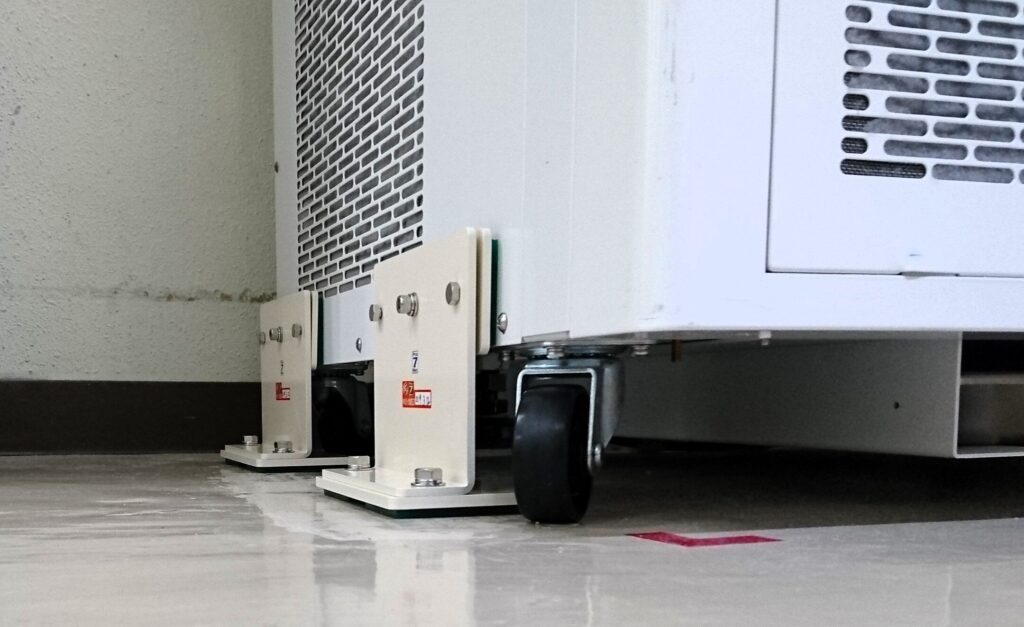
Equipment with wheels or casters is convenient because it can be moved during normal operations. During prolonged earthquake movement, that same mobility can become a risk. Examples may include:
Depending on the application, appropriate measures may include wheel locks, restraints, brackets, straps, or other suitable securing methods. The correct method depends on the equipment, weight, surface, operating environment, and manufacturer’s requirements.
For certain types of furniture and equipment, seismic adhesive pads can be one option for reducing movement. Pro7 offers seismic adhesive pads using gel material and describes applications including furniture, shelves, refrigerators, racks, and equipment with casters. Its products are designed for applications where drilling or conventional construction work may be undesirable.
For businesses, this type of approach can be useful when installation needs to minimize construction work or when drilling into floors, walls, or furniture is difficult. However, no securing method should be treated as universally suitable.
The weight and shape of the object, the surface, environmental conditions, and the installation requirements should all be considered before selecting a countermeasure.
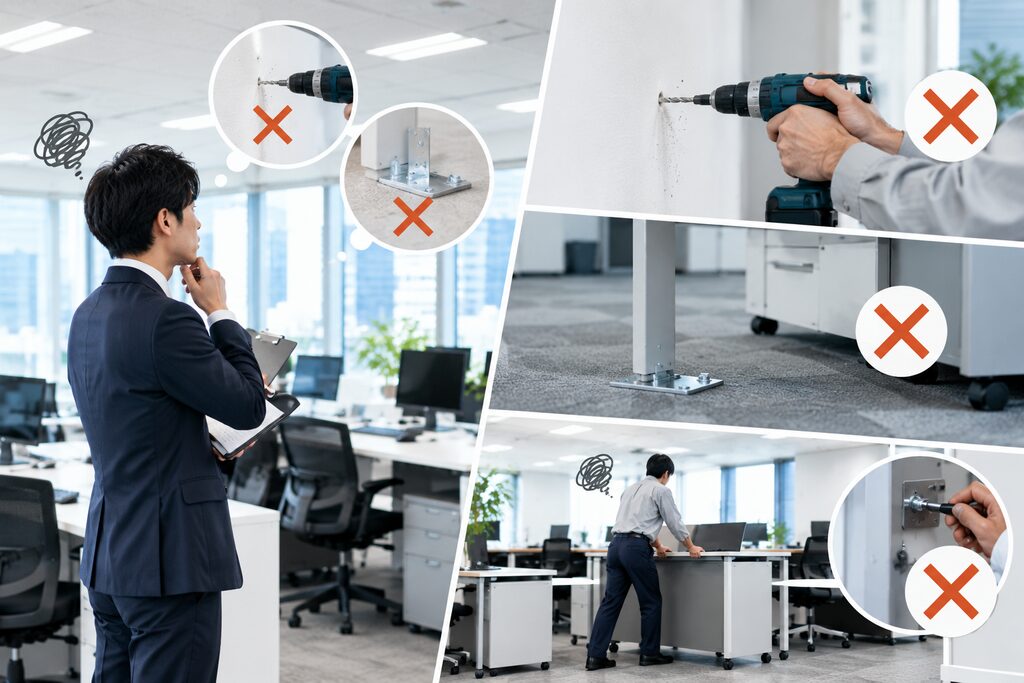
Businesses can prioritize their measures according to operational importance. One practical approach is to divide assets into three groups.
Critical assets: Failure would immediately affect safety or essential operations.
Important assets: Failure would significantly reduce productivity or delay recovery.
Non-critical assets: Failure would be inconvenient but would not seriously affect business continuity.
This approach helps organizations allocate time and resources efficiently. The objective is not necessarily to secure every object in exactly the same way. The objective is to reduce the most important risks first.
Business continuity is not only about recovering computer systems or contacting suppliers. It also depends on whether people can safely move through the facility and whether critical equipment remains usable.
Long-period ground motion provides an important reminder of this connection. A distant earthquake can still affect a high-rise building.

The goal of earthquake preparedness is not to predict exactly what the next earthquake will do.
It is to identify foreseeable hazards and reduce them before the shaking begins. For companies operating high-rise offices, laboratories, hospitals, and other facilities, reviewing furniture and equipment is therefore a practical part of a broader business continuity strategy. A safer workplace is not created by one measure alone. It is built through repeated assessment, appropriate countermeasures, regular inspections, and a clear understanding of what the business needs to protect most.
。